

In the early years of a child’s life, every small movement plays a big role in shaping their future abilities. From holding a crayon to buttoning a shirt, these simple actions are powered by fine motor skills. At BIPS Preschool, we understand that developing these skills is essential for a child’s overall growth, confidence, and independence.
Fine motor skills involve the coordination of small muscles in the hands, fingers, and wrists, often working together with the eyes. These skills may seem minor, but they are the foundation for many everyday tasks and academic activities that children will perform throughout their lives.
What Are Fine Motor Skills?
Fine motor skills refer to the ability to make precise movements using the small muscles of the hands and fingers. These movements require coordination between the brain and muscles, helping children perform tasks like:
- Holding and controlling a pencil
- Coloring within shapes
- Cutting with scissors
- Picking up small objects
- Buttoning clothes or zipping bags
As children grow, these skills become more refined and play a crucial role in their daily routines and learning experiences.
Why Are Fine Motor Skills Important?
1. Foundation for Writing Skills
One of the most important reasons to develop fine motor skills is to prepare children for writing. Before a child can write letters or numbers, they must have the hand strength and control to hold a pencil properly. Activities like coloring, tracing, and drawing help strengthen these muscles and improve grip.
2. Improves Hand-Eye Coordination
Fine motor activities help children coordinate what they see with what their hands do. For example, when a child tries to place a block in a specific spot or color within lines, they are improving their hand-eye coordination. This skill is essential not only for academics but also for sports and daily activities.
3. Builds Independence in Daily Tasks
From tying shoelaces to opening lunch boxes, fine motor skills allow children to perform everyday tasks independently. As children master these small movements, they gain confidence and a sense of achievement.
4. Enhances Cognitive Development
Fine motor activities are not just about physical movement—they also involve thinking, planning, and problem-solving. Activities like sorting, stacking, and threading beads encourage children to focus, think critically, and make decisions.
5. Boosts Confidence and Self-Esteem
When children are able to complete tasks on their own, it builds their confidence. Successfully finishing a drawing or assembling a puzzle gives them a sense of accomplishment, encouraging them to take on new challenges.
How BIPS Preschool Supports Fine Motor Development
At BIPS Preschool, we believe that children learn best through play-based and activity-based learning. Our curriculum is designed to include a variety of engaging activities that naturally develop fine motor skills while keeping children interested and happy.
1. Coloring and Drawing Activities
Children are encouraged to explore colors, shapes, and patterns through creative drawing sessions. These activities strengthen finger muscles and improve pencil control.
2. Paper Tearing and Crumpling
Simple activities like tearing paper or making paper balls help develop hand strength and coordination. These are fun, easy, and highly effective exercises for young learners.
3. Clay and Playdough Activities
Playing with clay allows children to squeeze, roll, and shape objects, which enhances finger strength and creativity at the same time.
4. Bead Threading and Lacing
Threading beads or lacing cards improves precision and concentration. It also helps children develop patience and focus.
5. Cutting and Pasting Activities
Using child-safe scissors under supervision helps improve control and coordination. Pasting activities also enhance creativity and planning skills.
Signs Your Child Is Developing Fine Motor Skills Well
Every child develops at their own pace, but here are some positive signs parents can look for:
- Holds crayons or pencils comfortably
- Enjoys drawing and coloring
- Can pick up small objects easily
- Shows interest in activities like puzzles or building blocks
- Tries to dress or feed themselves
If a child struggles consistently with these activities, gentle guidance and regular practice can help improve their skills over time.
Simple Fine Motor Activities Parents Can Try at Home
Parents play a vital role in supporting their child’s development. Here are some easy activities you can try at home:
- Encourage coloring and free drawing
- Let your child play with clay or dough
- Use puzzles and building blocks
- Practice buttoning and zipping clothes
- Try simple crafts like paper folding or tearing
The key is to make these activities fun and pressure-free, so children enjoy learning without feeling stressed.
The Role of Teachers and Environment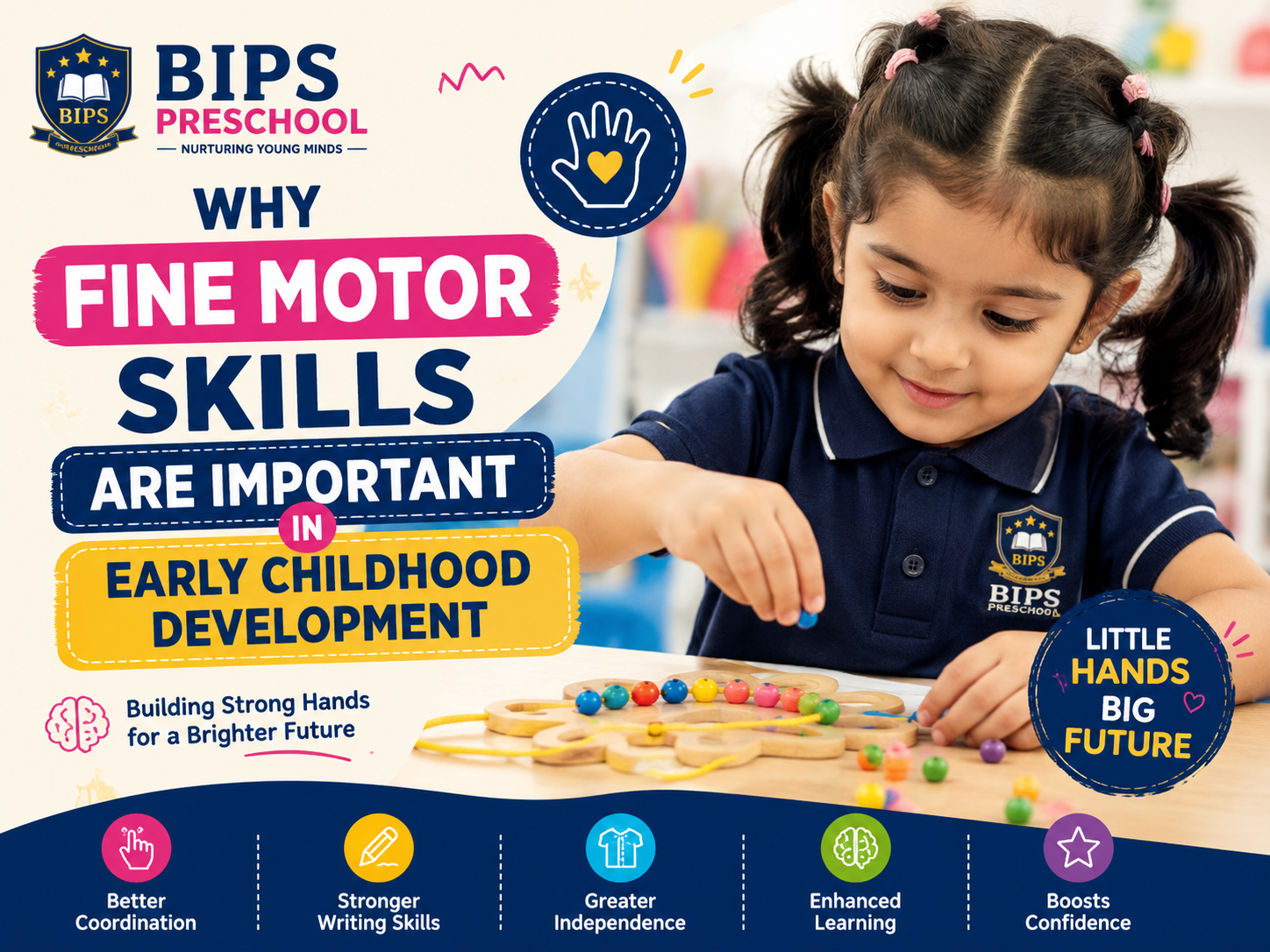
A supportive learning environment and skilled teachers make a significant difference in a child’s development. At BIPS Preschool, our educators carefully design activities that are age-appropriate, engaging, and development-focused. We ensure that every child gets the opportunity to explore, practice, and improve their skills at their own pace.
Conclusion
Fine motor skills are a crucial part of early childhood development, forming the foundation for writing, independence, and overall learning. By encouraging children to participate in simple, fun activities, we can help them build strong hands, sharp minds, and confident personalities.
At BIPS Preschool, we are committed to nurturing every child’s potential through creative and activity-based learning. Our goal is to make learning enjoyable while preparing children for future academic success and everyday life skills.